
DocsGPT 0.15: Elevating Document Interaction with Smart Tools and Memory Retention

Artificial Intelligence is moving fast. The industry is shifting from simple "Chat with your Data" interfaces to complex Agentic Workflows - systems where AI doesn't just answer questions, but performs tasks, writes code, and conducts deep research.
With the release of DocsGPT 0.15.0 🎉, we are redefining what an open-source gpt for docs solution can achieve. This isn't just a feature update; it is an architectural evolution. We have rebuilt the way DocsGPT handles prompts, connects to external tools, and most importantly how it manages memory over long conversations.
Whether you are using our cloud gpt platform or hosting locally, version 0.15 transforms DocsGPT from a passive knowledge retrieval tool into an active, intelligent agent. Here are the three major pillars of this release.
Precision Control: The New Prompt Rendering Engine 🎨
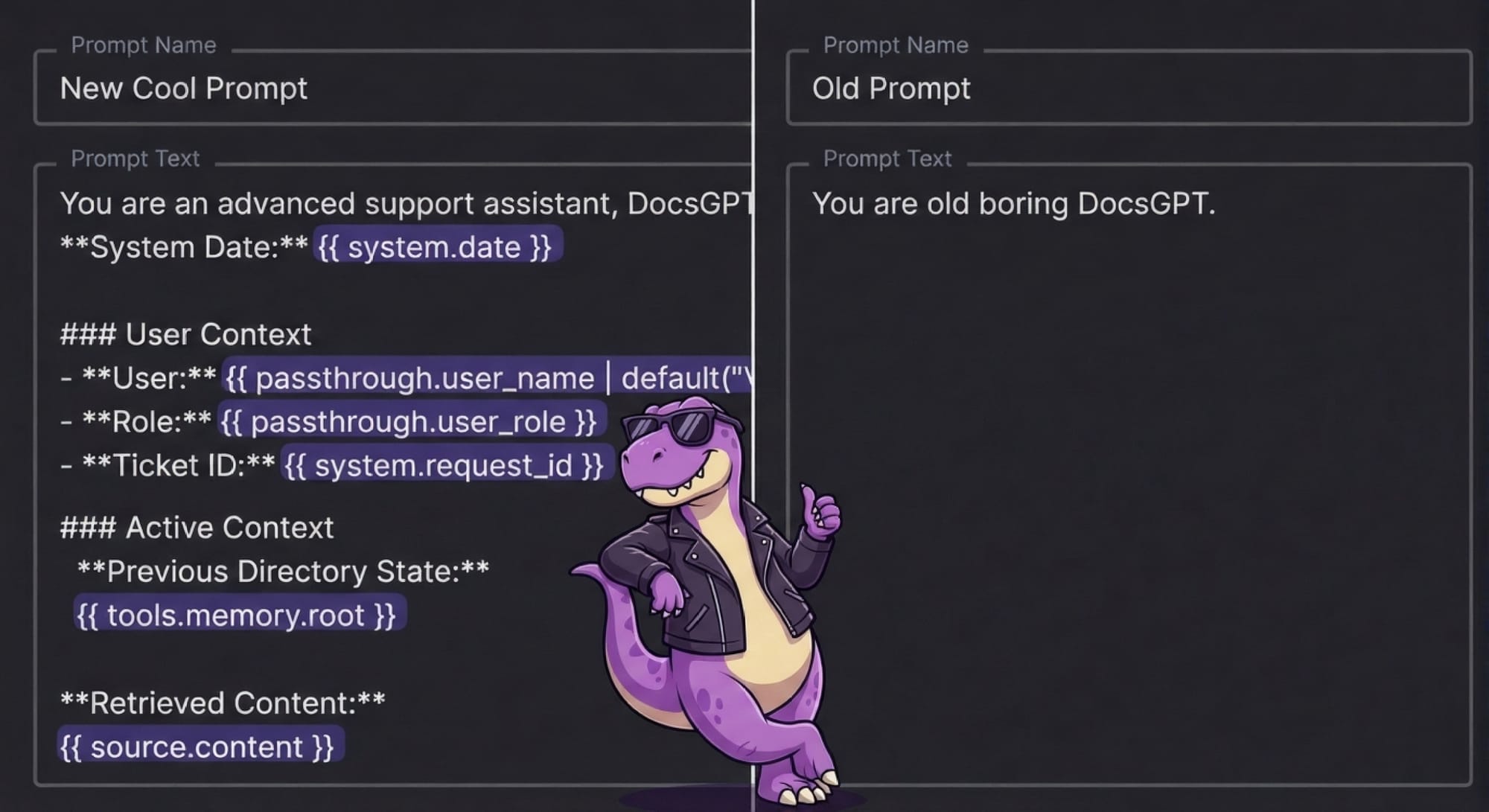
An agent is only as good as its instructions. In previous iterations, prompts were static text blocks. In 0.15, we have introduced a powerful Prompt Rendering Engine.
This new engine supports template-based rendering with dynamic namespace injection. Instead of rigid instructions, developers can now use enhanced variables (including system variables) to dynamically shape the AI's behavior in real-time based on the user's specific context or the tools being used.
Why this matters: This allows you to create highly specialized "Agent Personas" that can adapt on the fly. The prompt logic is no longer hard-coded; it is a fluid, programmable layer that ensures the AI understands exactly who it is supposed to be and what it is supposed to do, every single time.
Limitless Connectivity: Remote MCP & Instant Agents 🔌
A smart agent needs hands to do work. In version 0.15, DocsGPT now natively supports the Model Context Protocol (MCP).
MCP is quickly becoming the industry standard for connecting LLMs to external data and tools. With Remote MCP integration, you can connect DocsGPT to your favorite servers and APIs in just a couple of clicks. But we went a step further by linking this to Agent Templates & Seeding.
We know that configuring tools from scratch is time-consuming. With our new Agent Seeding, you can launch pre-configured agents instantly. Need a "DevOps Agent" that connects to GitHub? Or a "Research Agent" with web search capabilities? You can now seed these agents from templates, automatically pulling in the necessary prompts and MCP tool configurations.

Infinite Focus: Context Compression & Persistent Memory 🧠
Perhaps the most significant breakthrough in 0.15 is how we handle the "Goldfish Memory" problem.
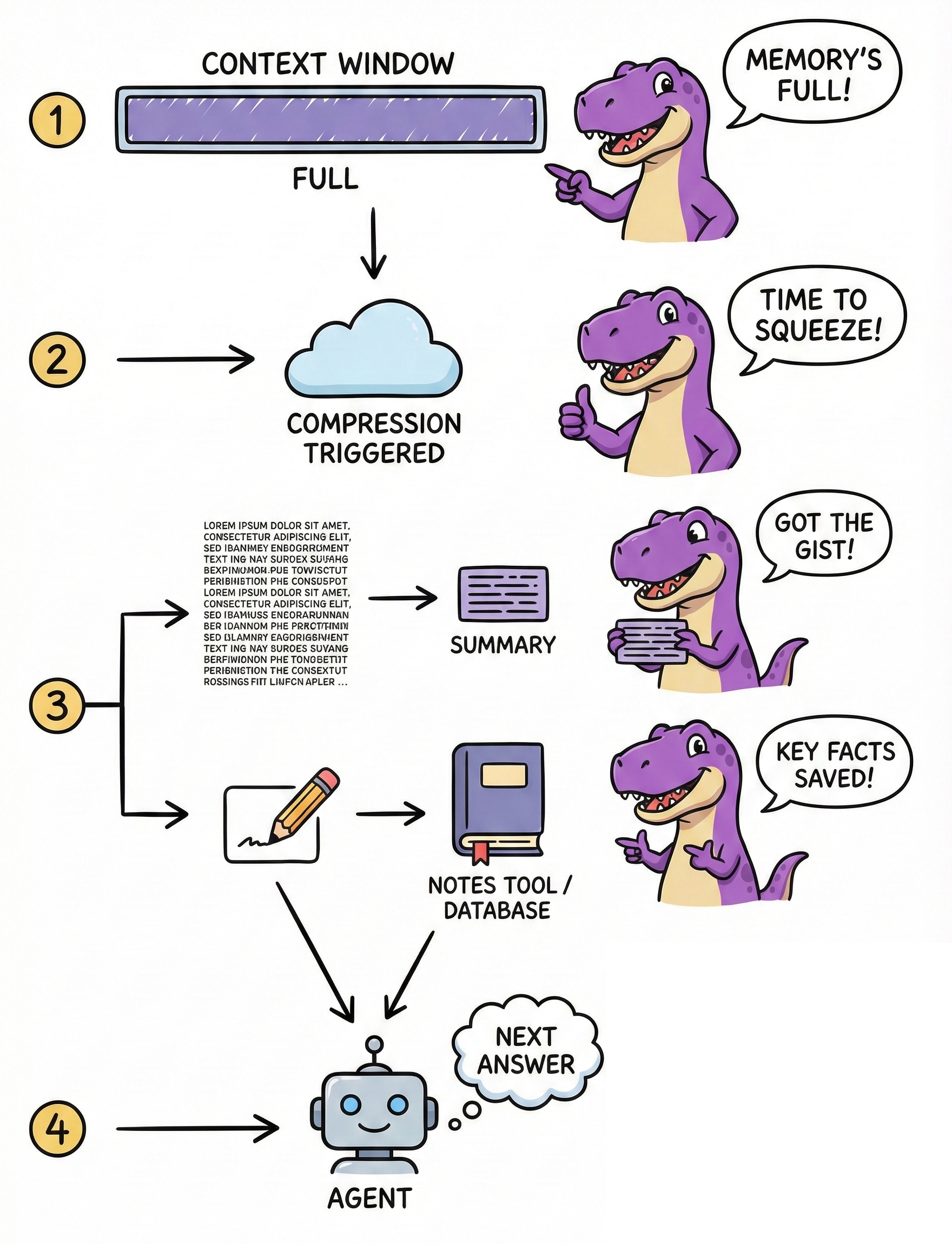
In complex tasks-like refactoring a large codebase or conducting a multi-step literature review LLMs notoriously "forget" earlier instructions as the context window fills up. They lose focus, hallucinate, or crash.
DocsGPT 0.15 introduces Context Compression paired with Persistent Memory Tools
- Smart Compression: When the context nears its limit, DocsGPT doesn't just cut off the oldest messages. It intelligently compresses the context, summarizing tool outputs and conversation history to maximize token efficiency without losing the thread of the conversation.
- Persistent Memory: We have linked this compression logic with TODO and Notes tools. This effectively gives the agent long-term memory. It can "write down" its plan in a Note, compress the conversation, and then recall that Note later to stay on track.
This combination allows for truly long-running sessions where the agent maintains high accuracy from the first prompt to the hundredth.
Important Enablers: Building Trust and Scale 🏗️
While the features above steal the show, 0.15 includes critical infrastructure upgrades that developers and enterprise users have been asking for.
Structured Output & JSON Schema 🧱
For an agent to be useful in a software pipeline, it needs to be predictable. We have added support for Structured Output and JSON Schema validation. This ensures that when you ask an agent for data, it returns clean, machine-readable JSON that your other applications can parse reliably - no more parsing regex from chatty text responses.
Model Registry & Multi-Provider Support 🤖
The AI landscape is fragmented. You might want OpenAI for reasoning, Anthropic for coding, and a local Llama model for privacy. Our new Model Registry system creates a unified interface to handle the specific capabilities of different providers, making it seamless to switch the "brain" of your agent without breaking the rest of your application.
Your Data, Everywhere 📂
We are expanding how you get data into DocsGPT:
Google Drive Ingestion: Connect your Google Drive directly. This is a game-changer for enterprise users who need their instance to ingest docs, sheets, and slides automatically.
PGVectorStore: We added support for PostgreSQL vector storage (using `pgvector`), offering a robust, scalable storage option for those hosting their own instances.
Refinements and Fixes ✨
As with every major release, we have polished the experience to ensure stability:
- Performance: Scripts now load faster by utilizing containers directly from Docker Hub.
- UI/UX: We've added "Toast" notifications for file uploads (so you know exactly when your data is ready), a "Cancel Response" button for immediate control, and improved drag-and-drop functionality.
- Stability: Comprehensive test coverage for the API and Agent layers ensures that 0.15 is our most stable release yet.
Conclusion
DocsGPT 0.15 is about capability. By combining a dynamic Prompt Rendering Engine, standardized Remote MCP tooling, and intelligent Context Compression, we are providing the foundation for the next generation of AI agents.
Whether you are building a personal assistant or an enterprise-grade automation platform, 0.15 gives you the tools to make it happen.
- Try it now ☁️
- Explore the Repository 📚
- Join our Community on Discord, X and LinkedIn 🤝